


2026
How Local 3PLs Help Calgary Importers Scale Faster
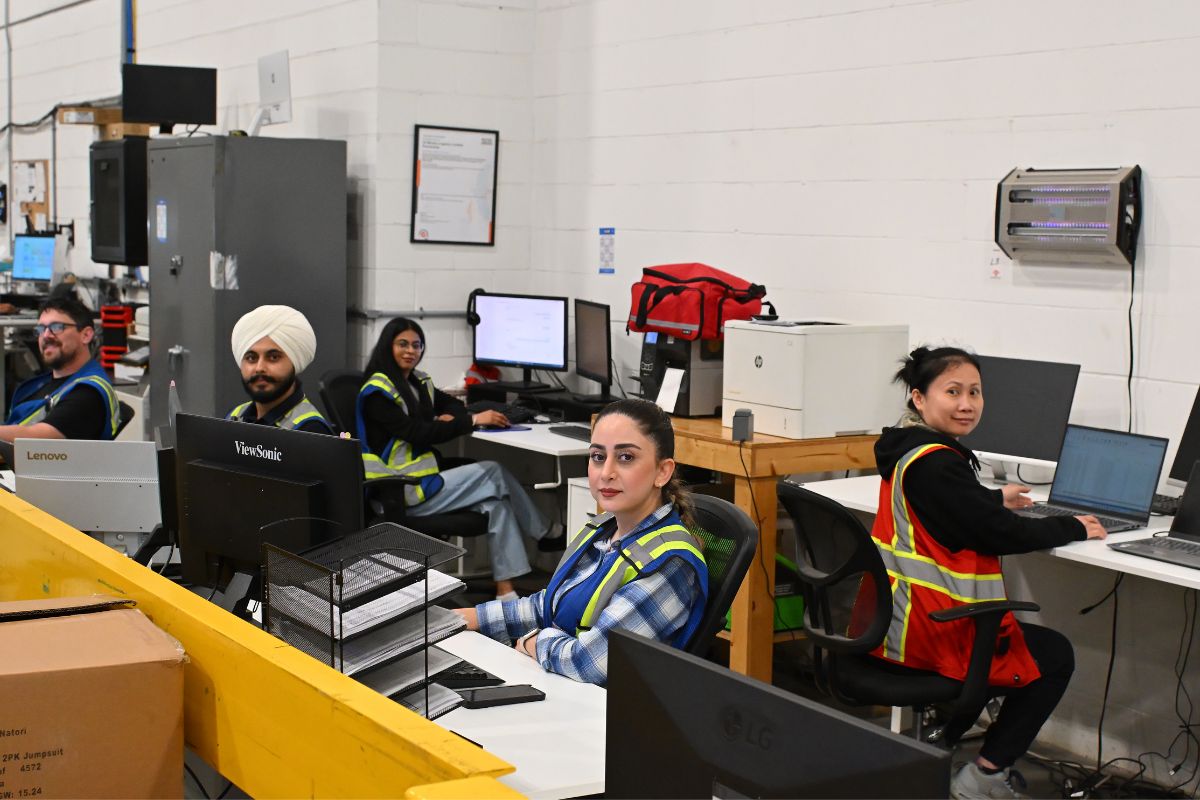
A local 3PL helps a Calgary importer scale by removing the two constraints that stop growing import businesses most often: physical capacity and operational expertise. Instead of signing a lease and hiring a team before the volume exists, the importer buys warehouse space and fulfilment labour as a variable cost that expands with demand and contracts when it slows. That single structural change lets a company take on larger orders than its balance sheet would otherwise support.
We see the pattern regularly. An importer lands a retail program, realizes the volume exceeds their current space, and faces a choice between turning down the order and committing to fixed costs on the strength of a purchase order. Neither option is good. A 3PL relationship makes it a non-question.
Calgary's genuine geographic advantage
This is not marketing language. The map does the work.
From Calgary, a truck reaches Edmonton in about three hours, Saskatoon and much of southern B.C. within a day, and Vancouver, Regina, and Winnipeg within one to two transit days depending on the lane. That radius covers the large majority of the Western Canadian consumer and industrial market from a single node.
The rail connection matters just as much for importers. Containers arriving through Vancouver or Prince Rupert move inland on established intermodal service to Calgary's rail facilities, which means goods can travel most of the way to their end market before anyone touches them. Alberta also charges no provincial sales tax, which simplifies pricing and landed-cost work for companies selling across multiple provinces.
Put together, Calgary functions as an efficient Western Canadian distribution point in a way that a coastal warehouse does not. The coast is where product lands, not where customers are.
What importers actually gain
Capacity that matches the season. Import businesses rarely have flat demand. Containers arrive in clusters, retail programs peak, and the slow months are genuinely slow. Under a 3PL model, you pay for pallet positions occupied and orders shipped. In an in-house model, you pay for the peak all year.
Container handling without container infrastructure. De-stuffing floor-loaded containers requires dock height doors, yard space, equipment, and a crew that can work through a 40-foot high-cube efficiently. Most growing importers have none of these. A 3PL handles receiving, devanning, palletization, and empty return as routine work, and coordinates the timing so demurrage and detention charges do not accumulate.
Retail compliance that would take a year to build in-house. This is the part that quietly makes or breaks retail programs. Major Canadian retailers publish routing guides specifying carton labelling, pallet configuration, advance shipping notices, EDI transaction sets, and delivery appointment procedures. Non-compliance generates chargebacks that erode margin quickly and, in some cases, damages the relationship. A 3PL already shipping to those retailers knows the requirements and has the systems configured. You inherit that capability on day one rather than learning it through penalties.
Ecommerce and marketplace fulfilment. Direct-to-consumer orders require different handling than pallet-out distribution, including piece picking, order-level packing, carrier rate shopping, and returns processing. Providers who run both models let importers serve wholesale and DTC channels from one inventory pool, which prevents the awkward situation of stock sitting in the wrong channel while the other one runs out.
Working capital that stays in the business. Racking, forklifts, a warehouse management system, and leasehold improvements consume capital that could fund inventory or marketing. For an importer, inventory is the growth engine. Every dollar diverted into warehouse infrastructure is a dollar not buying product.
Where importers get stuck, and how a provider unsticks it
The most common failure point is not space. It is the gap between the container arriving and the product becoming sellable.
Goods land, sit in a container or on the floor, and remain uncounted, unlabelled, and unavailable while orders wait. Every day in that state is a day of carrying cost with no revenue. Providers who receive properly (count against the packing list, put away to a system-tracked location, and make inventory available the same day) collapse that gap from a week to hours.
The second failure point is inventory accuracy. Spreadsheet inventory works at low SKU counts and falls apart as complexity grows. By the time an importer notices, they are overselling online, disappointing retail customers, and buying product they already own but cannot find. A warehouse management system with barcode scanning and cycle counting eliminates most of this, and you access it through a provider without licensing or implementing anything yourself.
The third is freight. Importers often ship LTL at published rates because their volume seems too small to negotiate. A 3PL tendering consistent volume across many customers accesses better pricing and better service, and that difference flows through on every outbound shipment.
Choosing a provider that supports growth rather than limiting it
Ask what happens when your volume triples. Some providers have surge capacity and some are already full, and the answer determines whether they can grow with you or become the constraint in eighteen months.
Ask how integration works. Your ecommerce platform, ERP, or EDI connection should exchange orders and inventory automatically. Manual order transmission by email works at low volume and becomes a source of errors at scale.
Ask about visibility. You should see inventory, order status, and receiving reports without calling anyone.
And ask about customs and bonded capability, even if you do not need it today. Importers frequently discover a duty deferral or re-export opportunity later, and a provider who already holds the licence saves you a transition at an inconvenient moment.
We work with importers moving product through Western Canada, from container receiving and transload through retail-compliant distribution and ecommerce fulfilment. Explore our Calgary warehousing and distribution services, or request a quote with your container volume, SKU count, and target markets. That is usually enough to size the right solution on the first call.