


2026
Calgary 3PL Warehouse vs In-House Storage: Cost Comparison
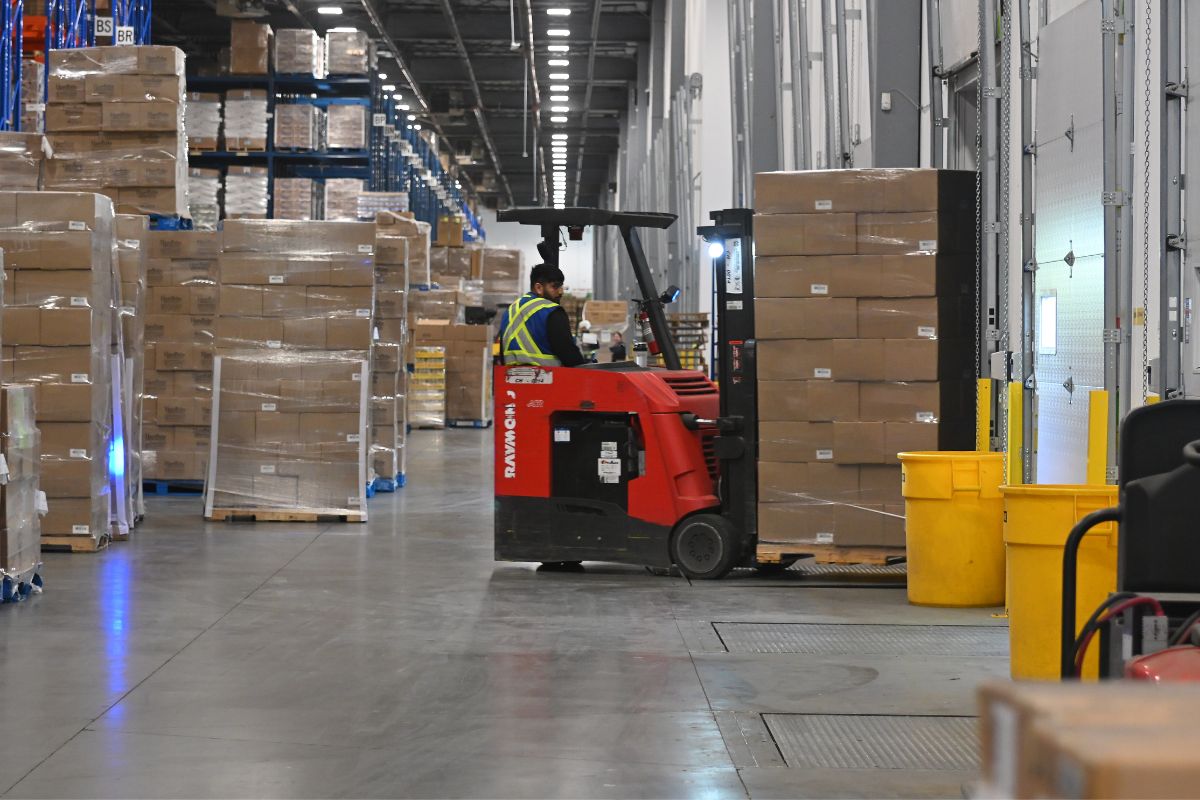
A Calgary 3PL warehouse converts your storage and fulfilment costs from fixed to variable. You pay for pallets stored and orders shipped rather than for a lease, racking, forklifts, and a payroll that continues whether volume arrives or not. In-house storage becomes the cheaper option once your volume is high enough and steady enough that you can keep a building consistently full and a team consistently busy. The entire decision comes down to where your business sits on that line.
Most companies get this wrong in the same direction. They compare a 3PL quote against a lease rate, conclude that in-house looks cheaper, and sign a five-year commitment. The lease is roughly a third of the true cost.
What in-house warehousing actually costs in Calgary
Build the model properly and the picture changes. Here is what belongs in it.
Occupancy. Calgary industrial space is quoted as a net rate per square foot per year, plus operating costs (property taxes, insurance, common area maintenance) that typically add several dollars per square foot on top. Ask any prospective landlord for the gross figure, not the headline net rate, because the difference between the two catches people out constantly. Space in and around Balzac, Rocky View County, and the northeast industrial corridor moves at different rates than older southeast product, and clear height changes your effective cost per pallet position considerably. A 32-foot clear building stores far more inventory per square foot than a 20-foot one at a similar rate.
Racking and fit-up. Selective pallet racking, installation, permits, and engineering represent real capital before a single pallet arrives. Add dock levellers if the building needs them, lighting upgrades, sprinkler adjustments for your commodity class, and a fenced yard if you handle containers.
Material handling equipment. A counterbalance forklift and a reach truck, purchased or leased, plus batteries or propane, plus scheduled maintenance, plus operator certification. Most companies underestimate maintenance until the first hydraulic failure.
Labour. This is the largest ongoing line and the least forgiving. You need coverage for receiving, putaway, picking, packing, shipping, and cycle counting, and you need it whether today's volume justifies it or not. Add statutory benefits, WCB premiums, vacation, and the cost of turnover, which runs high in warehouse roles across the country.
Systems. A warehouse management system, barcode scanners, a label printer, and integration to your ERP or ecommerce platform. Spreadsheet-based inventory works until it does not, and the failure usually arrives during your busiest month.
Everything else. Utilities, insurance on the building and the inventory, security, waste removal, pallets, stretch wrap, snow clearing through a Calgary winter, and the management time of whoever ends up supervising all of it. That last cost never appears in a budget and is frequently the most expensive item on the list.
What a 3PL charges
3PL pricing in Calgary follows a fairly consistent structure, and once you understand the components you can compare quotes properly:
- Receiving. Per pallet, per container, or per hour, depending on whether freight arrives palletized or floor-loaded.
- Storage. Per pallet position per month, sometimes billed per half-month, with premiums for temperature control or hazardous goods.
- Pick and pack. Per order plus per line or per unit, with packaging materials billed separately or bundled.
- Outbound handling. Per pallet or per shipment, plus freight.
- Account management and integration. Sometimes a monthly minimum, sometimes bundled, sometimes a setup fee for EDI or ecommerce connections.
- Value-added services. Labelling, kitting, returns processing, and quality inspection, usually priced per unit or per hour.
Read the minimums carefully. A monthly minimum turns a variable cost model back into a partially fixed one, which matters if your volume swings seasonally.
The comparison that actually matters
Stop comparing dollars per square foot to dollars per pallet. Compare total landed cost per order shipped across a full year, including your slow months.
Run it this way. Take twelve months of actual order volume, month by month. Model the in-house scenario using a facility sized for your peak, because you cannot rent half a warehouse in November and give it back in February. You carry that space and that team through the slow season regardless. Then model the 3PL scenario using the same twelve months of volume at quoted rates.
For most companies below a certain scale, the 3PL model wins clearly, and it wins by more than the spreadsheet suggests once you account for capital not spent and management attention not consumed. Somewhere north of consistently high volume and steady demand, the in-house model pulls ahead, because at that point your fixed costs spread across enough units to beat a provider's margin.
The factors that override the math
A few situations decide this regardless of cost.
Seasonality argues strongly for a 3PL. A business shipping heavy volume for four months and light volume for eight pays for empty space and idle labour all year in an in-house model.
Growth uncertainty argues the same way. Signing a long-term lease sized for a forecast is a bet, and a wrong bet is expensive in both directions, because outgrowing a building mid-lease is as painful as sitting in one that is half empty.
Specialized handling can push either way. Bonded goods, temperature control, or hazardous materials require licensing, infrastructure, and expertise that a provider already has. Meanwhile, highly unusual product handling or intellectual property concerns sometimes justify keeping operations in-house at a premium.
And Calgary's geography favours outsourcing more than most Canadian markets. The city reaches Edmonton, Vancouver, Saskatoon, and much of B.C. and Saskatchewan within one to two transit days, and Alberta charges no provincial sales tax. That makes Calgary an efficient distribution point for the entire West, and that case gets stronger when someone else carries the fixed cost of the building.
If you want a real comparison rather than a rough one, we will build the model with you using your own volume data. Start with our Calgary warehousing and distribution services to see how the pricing components work, or request a quote and send twelve months of order history. The answer usually becomes obvious within an hour of looking at the numbers properly.